Play With ASL: a game my brother built
to teach a language.
Jon Mowl is my brother, and Play With ASL is his company. He spent his career turning American Sign Language into something kids race the clock to learn — an app on the App Store, a school edition in a half-dozen universities, a movement mode called TILT! that gets a classroom out of their chairs. This is a profile of his work and the small ways we show up for each other.
What Play With ASL is
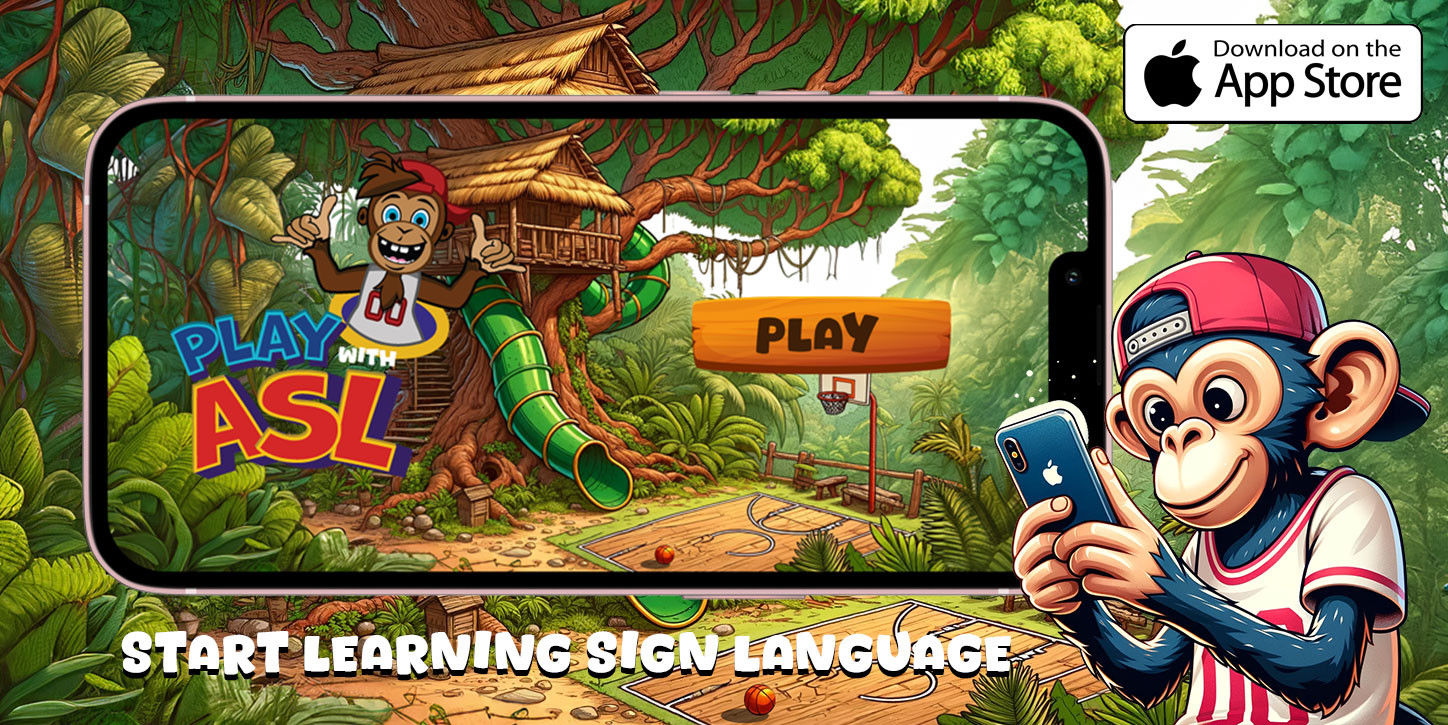
Play With ASL is a Deaf-owned educational company that turns American Sign Language into a game. Not a workbook with cartoon overlays. Not a vocab quiz dressed up in pastels. An actual game — with multiple play modes, receptive and expressive skill-building, head-to-head modes, and a school edition that drops into a curriculum the way a textbook used to.
The company’s belief, as they put it on their own homepage: access to language should be a universal right. The product is the consequence.
And the School Edition.
PWA’s teacher-facing product is a curriculum-based platform with individualized learning, progress tracking, and LTI 1.3 integration — meaning it drops into Canvas, Blackboard, Moodle, Schoology, and any other LMS that speaks the standard. Single sign-on for the kids, dashboards for the teachers, district-level reporting for the people writing checks.
The brother on the other half of the workbench
We grew up playing “Olympics chores” — turning every household task into a beat-the-clock event because Jon, even at seven, couldn’t stomach a job done slow. Vacuum the living room? Set the timer, race the timer. Stack the dishwasher? Stopwatch it. The chore was the same. The game was Jon’s. That is the entire origin story of Play With ASL — the conviction that anything worth doing is worth doing on a clock, with a score, with a re-rack at the end if you didn’t like the result. Decades later he built a whole company around it.
Jon’s career before PWA ran through federal-budget operations at the Defense Logistics Agency, where he managed a substantial operating budget and pushed workplace accessibility for Deaf employees at federal scale. Alongside the day job, he played for Team USA in basketball, team handball, and golf at the Deaflympics. He’s been a speaker at the ASU+GSV Summit on AI and accessibility. And he runs PWA with the same principle that organized our childhood: if the clock’s not running, the kid’s not bought in.
- Team USA · basketball, handball, golf · Deaflympics
- Defense Logistics Agency · operating-budget management
- ASU+GSV Summit speaker · AI, accessibility, ed-tech
- Olympics-chores graduate, class of forever
The thing about beating the clock is that it makes the work feel like the kid’s idea. That’s the whole game. — Jon, on why every PWA mode has a timer
The wins on the wall
SCORE 60th Anniversary Pitch · 2nd Place
2Gether-International · Audience Favorite
AWS × Deloitte Social Entrepreneur Accelerator
both companies share
SCORE national
and counting
drops into any system
Every PWA experience — the apps Jon ships and the previews running here.
The top row is what Jon actually sells: the iOS app, the game modes inside it, and the school edition. The bottom row is the in-browser preview lane — the same gameplay, rebuilt as web demos you can try right now on the 1891 demonstration page (paid PWA tier; one email to Jon away).
PWA’s apps
In-browser previews on madeby1891.com
Click any of the three above and a Coming-Soon card slides over the live experience with Jon’s direct address. He answers his own inbox — tell him you’re a school, a partner, press, a curious educator, and he’ll let you in.
Where my shop shows up
Jon’s shop is the curriculum. Mine is the room. PWA makes the kid want to keep coming back; 1891 is busy building the things that should already exist in the rooms they show up in — the keypad you sign at, the drive-thru that watches your hands, the kindness wall, the elevator that doesn’t need a button. Different work, easy overlap.
When a school, a children’s museum, or a clinic comes to either of us with the kind of space that should have a piece of both, we pick up the phone. He’s the only person whose feedback on a gameplay loop I trust without arguing first. I’m the only person he texts at midnight with an idea he wants to ship by Friday. That’s the whole partnership. No contract, no carve-up — just brothers who happen to be the right call for each other.
The kid who learns to sign in Jon’s app should walk into a venue I built and see the alphabet they just learned, signed back at them on a wall. That’s the only kind of overlap that matters. — Anthony
Where this goes
Play With ASL is the paid-tier home for the gamified-ASL experiences you can preview on the 1891 demonstration page. The trainer, the songs, the speed game, the spell mode, the sound booth, the Mac control — those are the seeds of a subscription product line scheduled to ship through the second half of 2026. For now, the demos open to anyone with the trial password. After that, they ship as PWA’s. They’ve always been PWA’s on the inside.
If you run an ASL classroom, a school district, a children’s museum, a children’s hospital, an accessibility-focused arts venue, or anywhere you think a kid would rather play than be taught — Jon wants to hear from you.
Want trial access, a school-edition demo, or a press conversation?
Email Jon directly. He answers his own inbox. Mention 1891 and he’ll know the context.
Play With ASL · playwithasl.com · iOS App Store · School Edition